 Call us now:
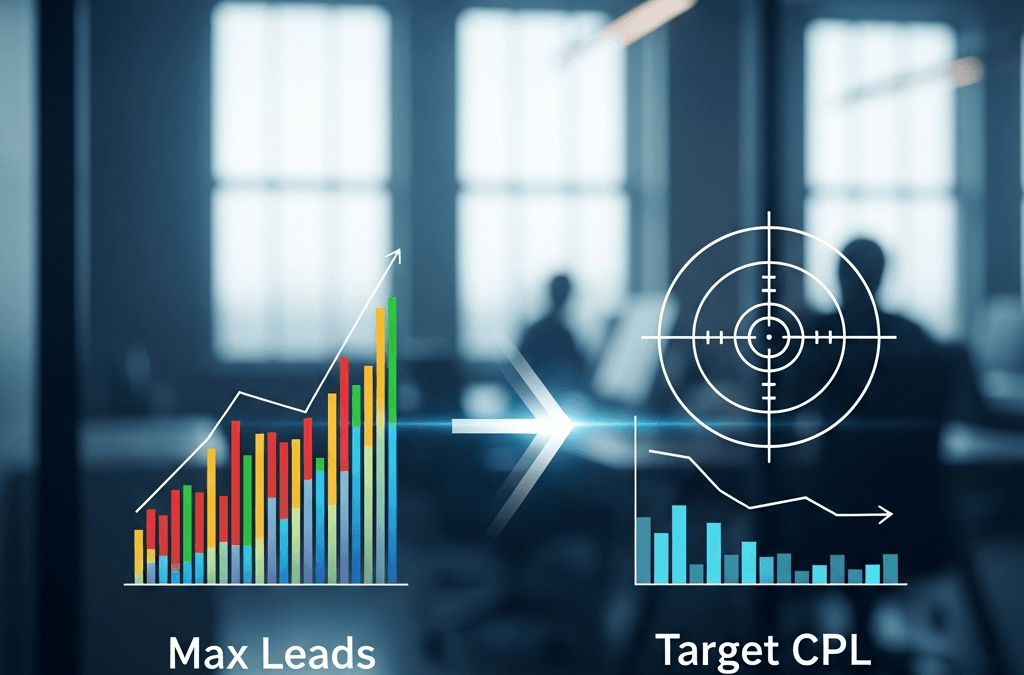
TL;DR: Figuring out the right bidding strategy on Google Local Services Ads (LSAs) can feel like you’re navigating a minefield. You’ve got options, and choosing between “Maximize Leads” and “Target CPL” isn’t always straightforward. This post will break down the differences, helping you understand which approach is best for your home services business in 2026. We’ll look at how both strategies work, when to use each, and ultimately, how to get the most bang for your buck.
Okay, so you’re running Local Services Ads (LSAs). Great! You’re trying to generate leads for your plumbing, HVAC, or electrical business, and you know you need a solid bidding strategy. But, which one? Let’s talk about the two main automated bidding options you’ll encounter: Maximize Leads and Target CPL (Cost Per Lead). The right choice can seriously impact your lead flow and your bottom line.
Maximize Leads: Cast a Wide Net
Think of “Maximize Leads” as your “set it and forget it” option. Google’s algorithm is given one simple goal: get you as many leads as possible within your budget. It doesn’t worry too much about the *cost* of each lead, just the *volume*. This can be appealing, especially when you’re starting out or trying to quickly ramp up your business. You’re essentially telling Google, “Hey, I’ve got this much to spend, get me all the customer calls you can!”
The potential benefits are clear: increased visibility, more leads coming in the door, and faster growth. However, the downside is that the quality of these leads can vary. You might get a bunch of inquiries that aren’t a great fit for your business or that are from people who aren’t really ready to buy. This is where understanding your “”LSA bidding strategy: Maximize Leads vs. Target CPL for home services”” becomes crucial.
Target CPL: Precision and Control
“Target CPL” (Cost Per Lead) allows you to tell Google exactly what you’re willing to pay for each lead. This gives you a much tighter grip on your budget and ensures you’re not overpaying for unqualified inquiries. You might set your Target CPL at $50, meaning you only want Google to show your ad to people who are likely to become leads if the estimated cost per lead is $50 or less.
The advantage here is efficiency. You’re getting more targeted leads, which usually translates to a higher conversion rate and better ROI. However, you might sacrifice some volume. Setting your Target CPL too low could mean you miss out on potential customers. You must know how each “”LSA bidding strategy: Maximize Leads vs. Target CPL for home services”” can affect the other.
So, Which Should You Choose?
Honestly, it depends. There’s no one-size-fits-all answer, but here’s a breakdown to guide you:
* New to LSAs? Start with Maximize Leads. It’ll help you gather data, understand your market, and see what kind of leads you’re attracting. After you’ve gathered enough data, analyze the lead quality.
* Tight Budget? Target CPL might be your best bet. It allows you to control costs and ensure you’re getting leads within your budget.
* High Conversion Rate? If you’re already closing a good percentage of the leads you’re getting, Target CPL can help you scale efficiently.
* Looking for Fast Growth? Maximize Leads can help you quickly increase your visibility and attract more customers.
Important Considerations for 2026
It’s important to note that LSAs, and Google Ads in general, are constantly evolving. By 2026, the algorithms powering these bidding strategies will be even more sophisticated. This means that the results you see might differ from what you expect based on older data. The machine learning aspect of “”LSA bidding strategy: Maximize Leads vs. Target CPL for home services”” will only improve with time.
Also, beware of simply setting a “Max per Lead” bid manually and assuming that’s the same as “Target CPL”. It’s not. While you *are* setting a limit, you’re not leveraging Google’s AI to optimize your bids based on the likelihood of conversion. “Max per Lead” is an older, less effective strategy in the face of automated options.
The Manual Bidding Trap
One thing many home service businesses stumble into is the “Max per Lead” manual bidding setting. This option gives you the feeling of control, but it’s largely a false sense of security. You set the maximum you’re willing to pay, and Google *might* stay under that, but it doesn’t actively *try* to get you the best possible CPL. The automated systems are far superior at predicting which searches are most likely to convert. The proper “”LSA bidding strategy: Maximize Leads vs. Target CPL for home services”” is key to avoid the ‘Max per Lead’ trap.
Testing and Iteration Are Key
Ultimately, the best way to determine the right LSA bidding strategy is to test and iterate. Start with one approach, track your results carefully, and then make adjustments based on your data. Don’t be afraid to switch strategies if you’re not seeing the results you want. Continuously evaluate which “”LSA bidding strategy: Maximize Leads vs. Target CPL for home services”” works best.
Pay attention to your lead quality, conversion rates, and overall ROI. By understanding the nuances of Maximize Leads and Target CPL, you can optimize your campaigns and generate more high-quality leads for your home services business in 2026 and beyond.